
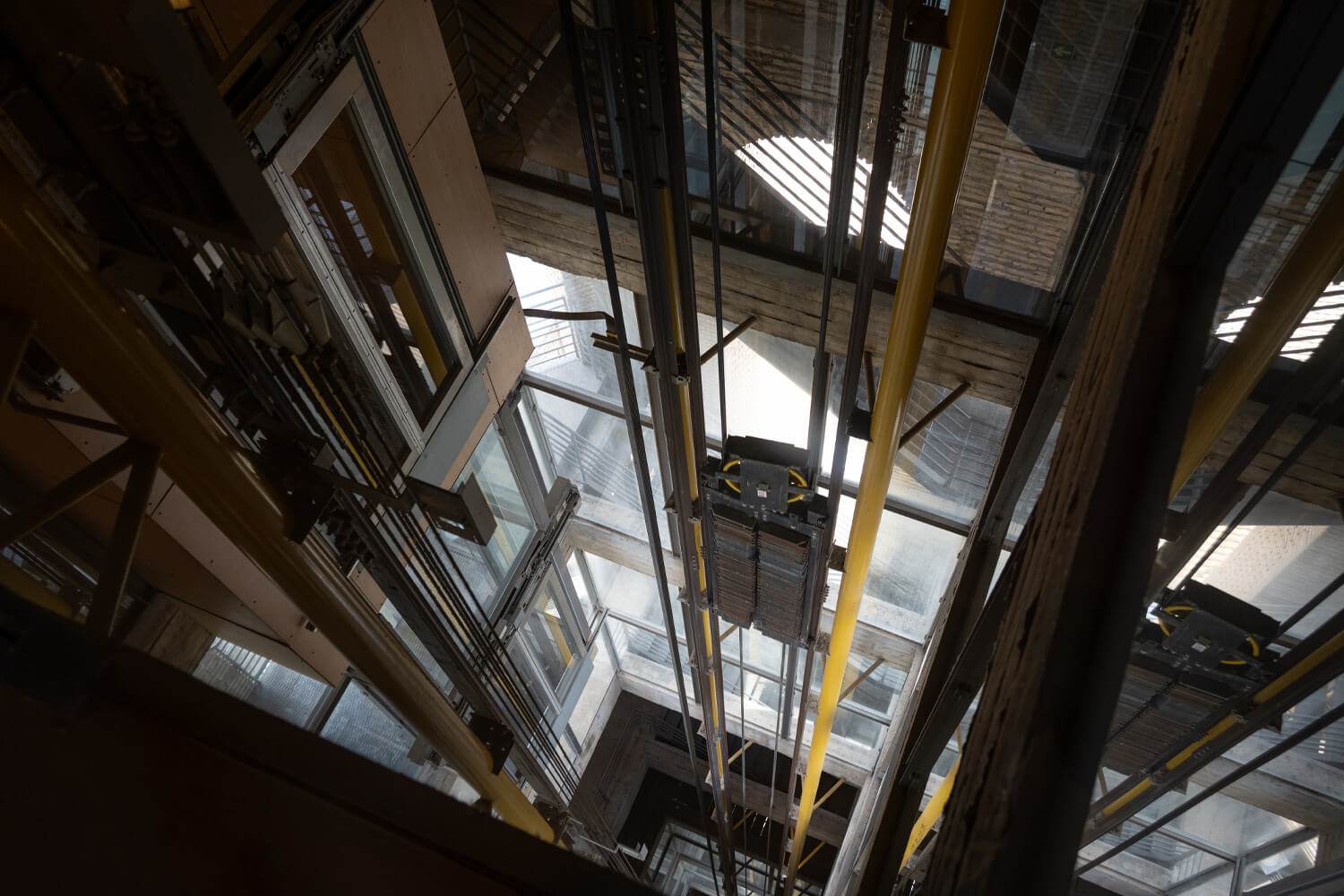
It’s easy for a building owner or maintenance manager to overlook the early signs of elevator guide shoe failure, especially when the elevator continues running. However, changes such as shaking, wobbling, or unfamiliar noises can indicate that the guide shoes are wearing and need inspection.
An elevator monitoring company provides a critical connection when passengers need assistance during an elevator emergency. Building owners and maintenance managers, however, can often address developing mechanical problems long before they reach that point. Guide shoes support a smooth, stable ride by keeping the elevator car and counterweight aligned as they travel along the guide rails. Knowing the warning signs helps you respond before wear begins affecting other components.
What Are Elevator Guide Shoes?
Understanding elevator guide shoe failure starts with how elevators work and where guide shoes fit in.
Elevator cars travel up and down the shaft on a pair of steel guide rails. Guide shoes keep the car aligned with the rails.
Some buildings use sliding shoes with a liner that glides along the rail; others use roller guide shoes with small wheels instead. Either way, they absorb side forces, keep guide rail contact smooth, and stop the car from swaying.
As liners or rollers deteriorate, however, ride quality can decline, and related components may wear out faster.
What Signals Elevator Guide Shoe Failure?
Guide shoes help control the ride and protect the rails. As a sliding-shoe liner wears thin or a roller deteriorates, metal components may contact or damage the guide rails. Catching the need for guide shoe replacement early is almost always cheaper than dealing with rail wear later.
Several indicators may suggest that the guide shoes need inspection or replacement.
Vibrations or Shaking
One of the first clues is a change in ride quality. Passengers may notice shaking when the elevator starts, stops, or moves at higher speeds. A car that once felt smooth may suddenly seem jerky or unstable.
Worn guide shoes can create more space between the shoe and guide rail, making it harder for the car to track the rail smoothly. Passengers may feel wobbling or excessive vibration.
Unusual Noises
Elevators shouldn’t suddenly make new sounds, like grinding or squealing, during normal operation. Unusual noise often points to increased friction, usually from damaged rollers or other guide-rail contact issues.
If a liner wears through, metal-on-metal contact may produce scraping or grinding sounds.
Uneven Wear
Guide shoes are wear components, so some deterioration is expected. The concern is damage that affects their ability to guide the car properly.
Technicians can inspect shoes during routine maintenance visits to check for uneven wear. This damage may indicate misalignment or excessive pressure over time.
Don’t Ignore the Early Clues
Spotting elevator guide shoe failure early helps protect ride quality and reduce unnecessary wear on related equipment. If passengers report unusual noises, uneven movement, or elevator shaking and vibration, it’s worth having the system inspected rather than brushing off the complaint.
You can also gain extra peace of mind with 24/7 elevator monitoring from ELEVATE Monitoring. To learn more, call (877) 990-9191.
