
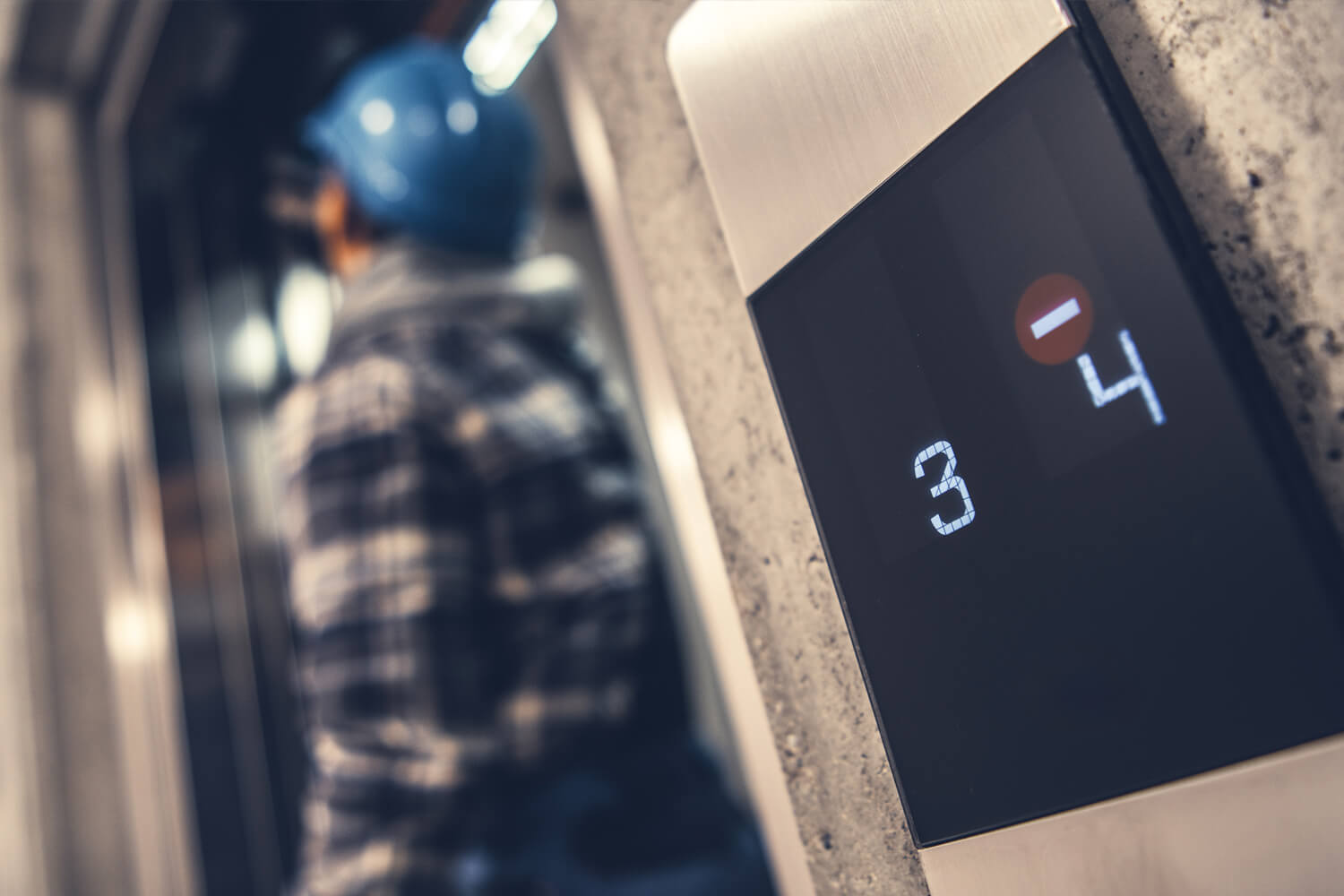
When you picture an elevator safety emergency, you may imagine the elevator car in free-fall, plummeting to the ground. But modern elevator safety equipment makes the chances of this ever happening extremely minimal.
Learn more about the role of elevator safety gear in preventing free-falls and how elevator monitoring services help keep passengers safe.
What Is Elevator Safety Gear?
In an elevator system, “safety gear” refers to a mechanical device designed to prevent overspeed or free-fall scenarios. There are a few different types of safety gear that can be installed in elevators:
- Instantaneous safety gear is used in low-speed, low-rise elevators to provide immediate braking.
- Progressive safety gear is used in high-speed, high-rise elevators, which help the car smoothly decelerate and stop when emergency conditions are detected.
How Does Elevator Safety Gear Prevent Free-Falls?
Proper elevator free-fall prevention is crucial to preventing catastrophic accidents and protecting passenger safety when malfunctions occur. Elevator safety gear acts as a last line of defense to halt the elevator car in the event that it exceeds safe speeds or certain mechanical parts fail.
Understanding how this mechanism works starts with knowing how elevators work. Elevators are designed to travel at predictable speeds and use sensors to stop at the target floor. Speed governors continuously monitor the elevator speed and trigger safety mechanisms when overspeeding is detected.
The elevator safety gear is mounted onto the car frame and activated when the elevator exceeds its rated speed by a certain percentage. The safety gear, which may consist of rollers or wedges, clamps onto the guide rails to safely bring the car to a stop. This mechanism can also become triggered if the suspension ropes or cables become loose, preventing the car from entering free-fall.
In many cases, once the safety gear is released, the elevator can only move upward until all parts are returned to normal operation.
Maintaining the Safe Operation of Elevator Safety Gear
Like other mechanical components in an elevator, the elevator safety gear also requires regular inspections and maintenance to ensure that it is always operable when an emergency scenario is triggered. Maintenance professionals should apply the recommended lubricants to prevent parts from sticking, inspect the safety gear closely for signs of wear or misalignment, remove dust and debris around the system, and test all parts periodically to ensure optimal performance.
Signs of malfunction may include:
- Slow or sticky responses, which may occur without adequate lubrication and cleaning
- Noisy operation, which may indicate misalignment
- Frequent false activations, which may mean sensors are not working properly
Upgrade Your Elevator Safety System With ELEVATE Monitoring
Knowing how a safety brake works is an important step in understanding the role of elevator safety gear and how several mechanisms work together to prevent free-falls. If you want to enhance the safety of your building’s elevator system, ELEVATE Monitoring provides advanced two-way video monitoring technology with 24/7 operator availability. Contact us today at 877-990-9191 to learn more about what we can do for your elevator system.
