
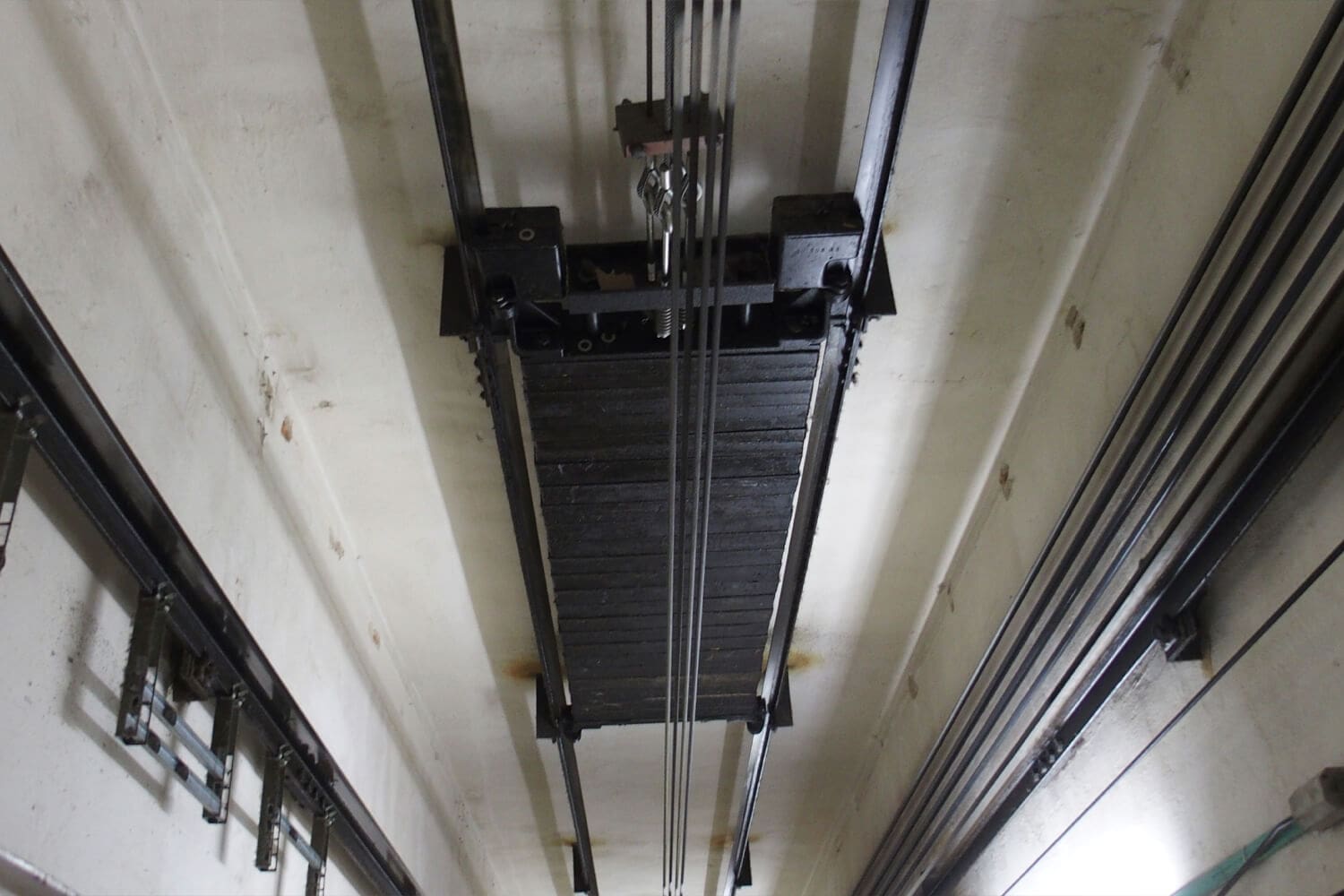
Many people do not think about how elevators work; they just expect to be safely transported to the intended floor. But elevators are complex systems that depend on an assortment of electrical and mechanical components to function properly. One often overlooked piece of the puzzle is the counterweight system.
Learn more about what counterweights are in elevators. To further enhance your elevator safety, consider our two-way elevator monitoring devices at ELEVATE Monitoring.
What Are Counterweights in Elevators?
The elevator counterweight helps the car maintain balance, stabilizes the elevator system as a whole, and provides a more comfortable user experience. These counterweights consist of steel or cast-iron blocks connected to the elevator car via hoisting ropes, balancing the weight of the elevator plus 40% to 50% of its rated passenger load.
Maintaining a balance of mass between the elevator car and its passengers promotes smoother operation and enhances system safety. Modern traction elevators depend on counterweight systems and cannot operate safely or efficiently without them.
The Importance of Counterweights for Elevator Safety
Without counterweights, the elevator motor would be responsible for lifting the entire weight of the elevator car and its passengers. This would place significant strain on the system and lead to a massive amount of energy consumption. Elevators would need much larger motors to operate reliably under these conditions.
Counterweights play important roles in an elevator’s safety and stability system. The main benefits of these weights include:
- Places less force on the cables, allowing them to operate for longer and reducing concerns of premature failure. (In modern elevators, if the cable broke during use, the car would still come to a safe stop due to built-in safety mechanisms.)
- Reduces the amount of braking necessary in normal elevator operation and prevents the elevator from falling downward, offering a smoother and safer ride overall
- Minimizes energy usage by reducing the amount of energy the motor uses when lifting the elevator car
- Maximizes stability in the elevator, especially during emergency stops
- Increases the elevator’s lifting capacity, allowing it to transport more passengers in each trip safely
Do All Elevators Need Counterweights?
Counterweights are an important part of load-balancing mechanisms, but not all types of elevators need this system. Counterweights are mainly used in traction elevators. Meanwhile, hydraulic elevators operate using a ram or piston to push the elevator up, meaning they do not need to be balanced by a counterweight.
In elevators that do rely on counterweights, elevator inspectors must ensure that these weights are installed properly and continue providing the necessary functions. Counterweights should be securely fastened, and the elevator should have protective devices that quickly stop operations if the car exceeds safe speeds.
Enhance Your Elevator Safety With ELEVATE Monitoring
Now that you know what counterweights are in elevators and how they impact elevator performance, you can feel confident that your traction elevator will promote a smooth, efficient ride. ELEVATE Monitoring offers two-way video monitoring systems that can enhance your safety systems further. Call 877-990-9191 to learn more.
