
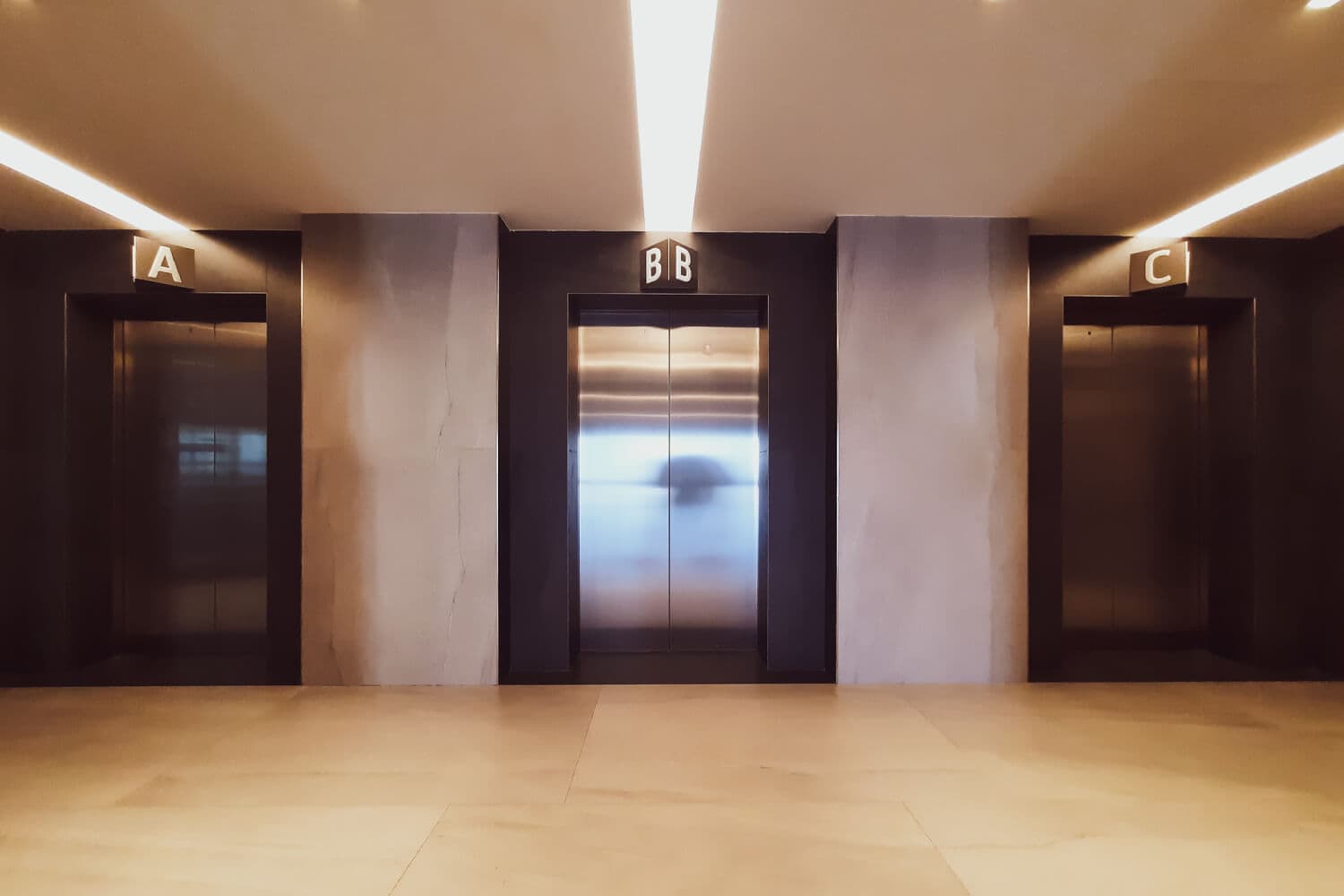
Many large commercial buildings have more than one elevator car. When a user presses a button to call an elevator to their floor, the system might send one of several cars to them. So how do elevator systems manage multiple cars in the same building? The answer is the elevator group control system.
This system enables the elevators in a building to communicate with a central controller that makes decisions about which car should respond to the call button. Learn how elevator group control systems work from ELEVATE Monitoring.
What Is an Elevator Group Control System?
When riding an elevator, you may not think too deeply about the mechanisms involved in efficiently bringing the elevator car to your floor. But the elevator group control system is working behind the scenes to ensure that all elevator cars in the building work together cooperatively.
Building occupants generally expect riding an elevator to be more efficient than taking the stairs. Therefore, they should not need to wait more than a minute or two for the elevator car to arrive at their floor.
The general recommendation is that buildings should have one elevator car per 50,000 square feet, or one car for every 75 to 80 rooms in a hotel. But having more than one car in a system means that the cars need to communicate with each other efficiently to minimize wait times and serve their purpose.
The elevator group control system ensures seamless communication between systems and enacts several automations to reduce wait times, such as sending a car to the main floor when it detects that none are there.
How Do Elevator Group Control Systems Work?
The control system monitors a range of variables to understand each car’s current status and conduct effective elevator traffic management. These variables include:
- Car position
- Car direction
- Load of each car
- Current traffic patterns
- Average number of stops each car is making per trip
All of these factors play into the estimated ride time for a user calling an elevator to their floor. Each elevator car’s main controller sends signals to the elevator group control system indicating these variables, which then allows the control system to determine which elevator will provide the shortest waiting time.
Elevator group control systems might monitor these factors in different ways depending on how the system operates. Some simpler systems are pre-programmed to understand certain parameters, such as the peak traffic times of morning, lunchtime, and evening in an office building, and adjust their response during those times.
Enhance Elevator Safety With ELEVATE Monitoring
If your building has multiple elevator cars, your elevator group control system plays a major role in conducting elevator traffic analyses and reducing wait times for guests. You can enhance the safety of your elevator system as a whole through ELEVATE Monitoring’s two-way video monitoring systems.
Our technology makes it easy for passengers to receive real-time, face-to-face assistance when they need it. Call 877-990-9191 to learn more about our 24/7 monitoring technology.
